Choosing the Right Housing Option for an Aging Parent
One of the hardest decisions families face is deciding where an aging parent should live. Many people immediately think they have to choose between staying home or moving into a nursing home. In reality, there are several options, and each provides a different balance of independence, support, safety, and cost.
This guide will help you understand those options so you can decide which one best fits your family's situation.
Simple Answer:
There isn't one "best" housing option for every older adult. The right choice depends on health, safety, independence, finances, and personal preferences. This guide compares the most common options.
Why This Is So Confusing
Most families don't wake up one morning knowing and say…
Let’s move mom to an Assisted Living Community
or
Dad needs to move from his house
They rarely know exactly what to do. Instead, they slowly begin noticing changes. Maybe Mom is forgetting medications. Maybe Dad is falling more often. Maybe the house has become too much to maintain. The goal isn't simply to find a place to live. The goal is to find the living situation that provides the greatest amount of independence while still providing the support your parent actually needs. There are really 4 housing options most families consider…..
Aging in Place is best for older adults who can continue living safely at home with little or moderate support. This may include:
• Home modifications
• Family assistance added
• Meal delivery programs
• Transportation assistance
• Medication reminders
Advantages
• Familiar surroundings
• Maximum independence
• Stay in the family home
• Usually least disruptive
Challenges
• Home Maintenance
• Safety concerns as needs change
• Increasing caregiving responsibilities
Learn about Aging in Place
Assisted Living communities offer the additional support your mom or dad may need with the freedom to still have their own living space and schedule. There is likely assistance with things like:
• Bathing and Dressing
• Medication management
• Meals
• Housekeeping
• Daily support
Advantages
• Professional staff available
• Less stress for family
• Safer environment
• Social opportunities
Challenges
• Monthly cost
• Adjustment period
• Less privacy than living at home
Learn about Assisted Living
Independent Living communities work for seniors who no longer want the responsibility of living alone. These communities offer:
• Social activities
• Maintenance-free living
• Dining options
• Transportation
• Community events
Advantages
• Active lifestyle
• More opportunities to socialize
• Less home maintenance
• Greater convenience
Challenges
• Limited medical support
• More care may eventually be needed
• Added transitional stress
Learn about Independent Living
Memory Care communities are designed for older adults living with dementia or other memory related diseases. These communities are best for those needing more support and offer things, such as:
• Secure access and increases supervision
• Dementia-trained caregivers
• Structured routines
• Activities for memory impairment
• Increased supervision
Advantages
• Higher level of safety
• Closely knit group of residents
• Reduced caregiver stress
• Purpose-built environment
Challenges
• Added care plans and monthly cost
• Emotional transition
• Little to no independence
Learn about Memory Care
Senior Living Isn't Always a Straight Line
It's easy to think of senior living as a series of steps:
Aging in Place → Independent Living → Assisted Living → Memory Care
But families don't always move through each option in order.
Your mom or dad may live safely at home for years before moving directly to assisted living. Someone in independent living may eventually need memory care without ever needing assisted living.
The goal isn't to figure out which step comes next. It's to find the living situation that best matches your mom or dad's needs today.
Paying for Care
First, Learn how Communities Decide Pricing
After families decide where Mom or Dad should live, the next question is usually…
How do we pay for it.
Fortunately, there are several funding options depending on your family's situation, including…
Home equity where the House Pays for Care
Long-term care insurance
VA benefits
Private pay
Learn more about Paying for Care
What about Medicare or Medicaid???
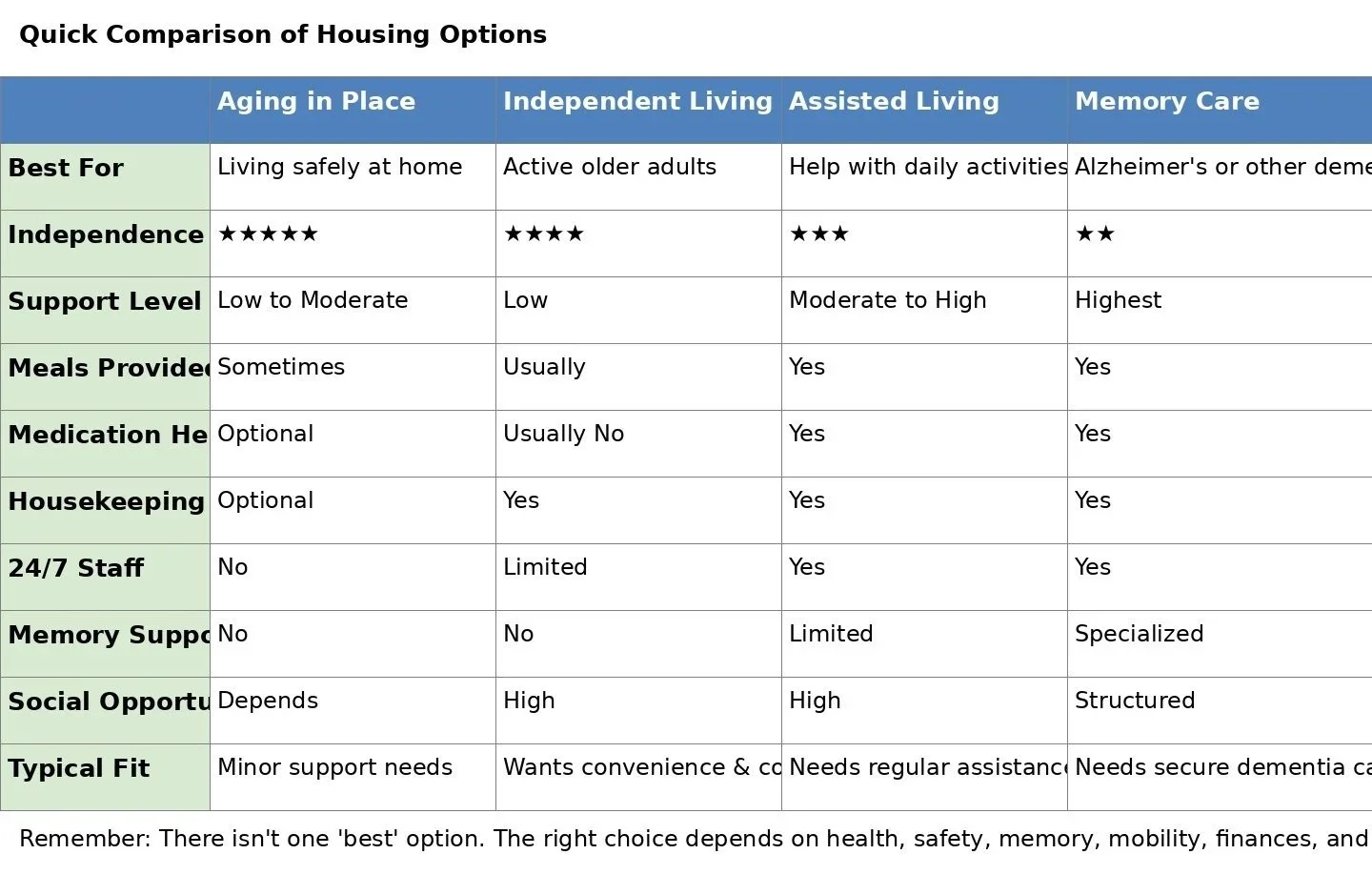
How Families Usually Decide
Most families don't choose based on age. They choose based on whether their parent can continue living safely and happily where they are. Questions families often ask include:
• Is Mom or Dad safe living alone?
Do you know Is it Safe for Them to Live Alone
• Are medications being managed?
• Do they have good days and bad days?
Learn Why Good Days and Bad Days Are So Exhausting
• Are memory changes getting worse?
• Is loneliness becoming a concern?
Find out the Science as to Why Older Adults Isolate
• Is caregiving becoming too much for one person?
What Comes Next?
Once you've identified the housing option that seems like the best fit, the next challenge is usually making the transition.
Sometimes that means preparing a home for sale, downsizing decades of belongings, coordinating a move, or helping a parent adjust emotionally. If you need help navigating, please ask
Explore The Actual Move
Questions I’ve Been Faced with When it Comes to Housing
-
Sometimes, yes. Many older adults do well at home with the right support. The key question isn't whether they want to stay home, but whether they can do so safely without putting themselves or others at unnecessary risk.
Explore Is It Safe for Them to Be Alone?
-
This is a huge decision and effects everyone, so, naturally, No One Even Wants to Have This Conversation.
Besides that, you may not even know What You’re Really Deciding
-
That's okay. You don't have to make every decision at once. In most cases, families have four options: sell the home, keep it, rent it, or wait until they have more information.
-
Yes. Families often need guidance beyond simply choosing a housing option. Whether you're evaluating care, preparing a home for sale, downsizing, or coordinating a move, having someone walk alongside you can make the process much less overwhelming.
You should always involve the right people
or
-
When safety, health, or quality of life can no longer be maintained at home, it may be time to consider another living arrangement. Frequent falls, medication problems, wandering, or caregiver burnout are common signs.
What are the Signs It’s Time?
-
There is no set order. In fact, sometimes people move straight into Memory Care communities and skip the others. You just should know which type of community is best.
When Independent Living Makes Sense
Start With Clarity
You don’t need to figure everything out today. You just need to understand your next step. If you’d like someone to talk it through, feel free to