Memory Care: What It Really Looks Like
Quick Answer
Memory care is necessary when memory loss affects safety, routine, and decision-making, requiring structured support and a secure environment.
Moving into an Memory Care community is a decision about safety. Your mom or dad is experiencing severe cognitive decline, which directly affects their safety and long-term health. A diagnosis of some stage of dementia usually proceeds the move and is usually an escalation from other parts of the Senior Housing process. This is about immediate safety and has skilled medical professionals available for 24-hour care.
My father-in-law was diagnosed with dementia and moved into an Assisted Living community. He was in that part of the community when it was recommended he move into the Memory Care section of the community. This came as a shock until
We were called and told that he wandered off property. and when we did find him, he was very confused about where he was and why he left in the first place.
On multiple occasions he became somewhat aggressive with the staff.
We were told he neglected his personal hygiene and had hardly used his shower since arriving.
We visited and he began speaking about hallucinations and a noticeable paranoia about the community.
For his safety, we agreed that he needed more intensive care and round-the-clock support.
What Life Looks Like
Communities that have a dedicated area for memory care are usually the right choice for your mom or dad when they’re in imminent danger because of their cognitive issues. These communities are specifically designed to keep them safe and comfortable by providing services like…
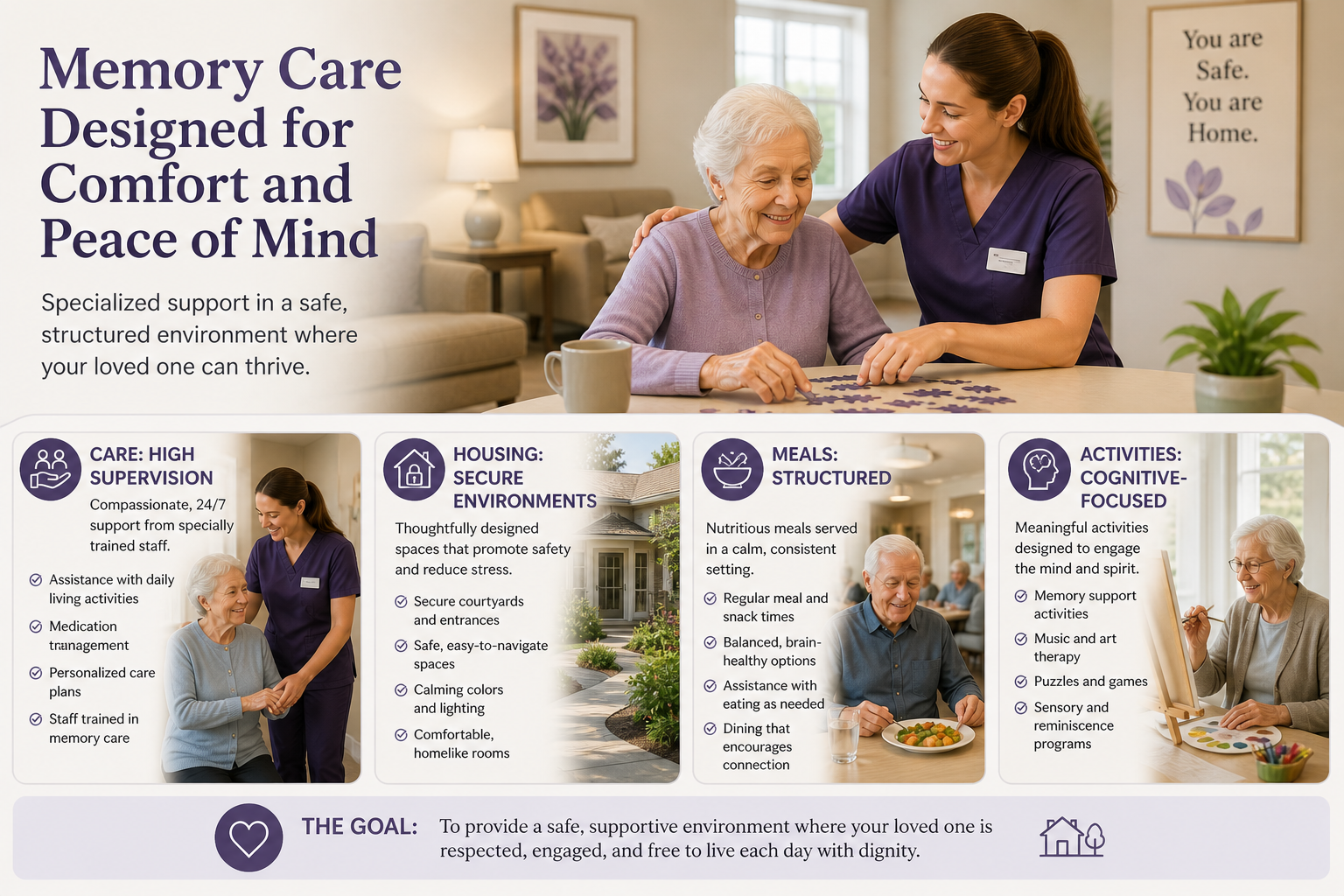
Highly supervised care: Dedicated staff is nearby at all times and assist with nearly every aspect of their lives
Meal plans: There are structured meals that provide healthy options for every meal at the appropriate time.
Activities: There are daily activities that are focused on their mental acuity and stimulate their minds
Secured access: The entrances and exits are only accessible by staff to prevent wandering
Community Lifestyle: These communities thrive because the residents are tightly knit as they are smaller. Almost everything is done with everyone involved. Activities are structured for participation, meals are served “family style,” and there is a clear connection between the residents.
Sometimes this new lifestyle makes them hesitant to venture outside of the community setting. They may not want to visit or want to go home quicker than you’d like. Don’t take it personal, this is common and by design.
Why do they have a reliance on their small community and why it’s by design… Don’t worry, it’s good
Who This Works Best For… and When It Doesn’t Anymore
At this stage of their life, your mom or dad is dealing with a memory-related disease that directly affects their safety. Whether or not you know the exact disease, you are doing the right thing by having
Dedicated people take care of them and their daily lives
A safe environment for them to flourish in
Memory Care communities are great until the disease progresses into stages when…
If you’re thinking it’s time to explore, it’s good to Start Here
Gauge what is happening and
Staff are unable to provide the care needed
They lose all mobility