When a Parent's Home Isn’t the RIGHT SIZE for Their Life, the Hardest Question Is Always the Same - What to Do with the House

Helping Denver families decide what to do when aging parents can no longer live safely at home is the mission of Denver RIGHTSIZING
The Rightsizing Quiz can help determine if it’s time to RIGHTSIZE
This Rightsizing Guide helps to you plan he next steps with clarity and confidence.
Finding clarity around safety concerns, senior living decisions, and what to do with a parent’s home

Why Families Start Searching for Help
For many families, the moment comes slowly… and then suddenly.
You may have noticed things like:
• Increase in falls or difficulty navigating stairs
• Confusions managing medications
• the home has become overwhelming and harder to maintain
• they are increasingly isolated, lonely, or have other personality changes that just aren’t right
• memory changes are affecting things they once enjoyed in their daily life
When these signs appear, many families start by asking
Followed by questions like:
Eventually THE MAIN question emerges:
Denver Right-Sizing helps families navigate this transition with clarity, compassion, and calm, including the decisions surrounding the home. If you are unsure what is right for your family, this short quiz will help clarify what steps may come next- all in about 2 minutes! Start Here

What should we do next?
Is it still safe for them to live here?

Are they able to live alone?
What other housing options exists?
What should we do with the house?

Most families who take this quiz tell me the same thing afterward: "I wish we had started thinking about this sooner."

Meet Tim
Hi!
Over the last several years, my own family has navigated the same difficult transitions many families face when aging parents can no longer live safely in their home. In addition, in my real estate career, I have had the privilege to help families encountering questions about their parents’ homes. Experiencing loved ones move out of home they have lived in for decades showed me how complicated these decisions can be and that mindset and strategies are vital to a smooth move.
These experiences are not theoretical to me.

“I’ve sat in hospital rooms when adult children ask if it is still safe for them to live at home?
I have researched for my only family other options for their living situation?
I met with families as they struggle to decide what to do with the house?”
Families often come to me somewhere in the middle of these moments
These experiences have shaped the way I approach my work today. I discovered a passion for helping families through this moment and know that is much more than simply selling a property. It requires patience, empathy, and a thoughtful plan.
How I Help Families Navigate This Transition and RIGHTSIZE:
From recognizing the signs they need help to deciding what to do with a longtime family home, my focus is on creating calm, thoughtful plans — not rushed decisions. Often, this includes helping families:
• understand their options for the home
• coordinate decluttering and preparing the property
• create a thoughtful timeline for the transition
• guide the process of selling the home when the time is right
Every family’s situation is unique. The goal is never to rush decisions Instead, I help families move forward with clarity and confidence.
Questions Families Often Ask When a Parent’s Living Situation Starts to Change
Q: How do I know if my parent may no longer be safe living alone?
A: Many families first notice small changes — missed medications, falls, confusion, or difficulty keeping up with the home. Sometimes the turning point happens after a hospital visit or health event. Every situation is different, but families often begin exploring options when daily living becomes harder or safety becomes uncertain.
Q: How do families start the conversation about senior living?
A: The best conversations focus on safety, independence, and quality of life rather than urgency. Starting early allows parents to participate in the decision.
Q: What housing options exist for aging parents?
A: Families should understand the differences between independent living, assisted living, and memory care. With that knowledge, families then consider things like location, availability, level of care, and costs to decide their next step. Their doctors’ office or other experts are valuable resources.
Q: What should families do with the house if a parent moves?
A: This is often one of the most emotional decisions families face. The home may represent decades of memories, family gatherings, and history. Some families sell the home to help fund care, others keep it temporarily while decisions become clearer. Understanding the financial, emotional, and practical implications can help families make a calmer decision.
Not sure where your family might be?
When a Parent Can No Longer Safely Live Alone - Don’t Let the Home Become Problem
When a parent moves into a new living situation, families often need to decide what happens to the home.
Some families choose to:
• sell the home
• rent it temporarily
• keep it in the family
• wait until care needs become clearer
The decision is rarely simple.
Homes often contain decades of belongings and memories.
Siblings may have different perspectives about what should happen next.
And many families simply aren’t sure where to begin.
Understanding the options can make the process feel far less overwhelming.
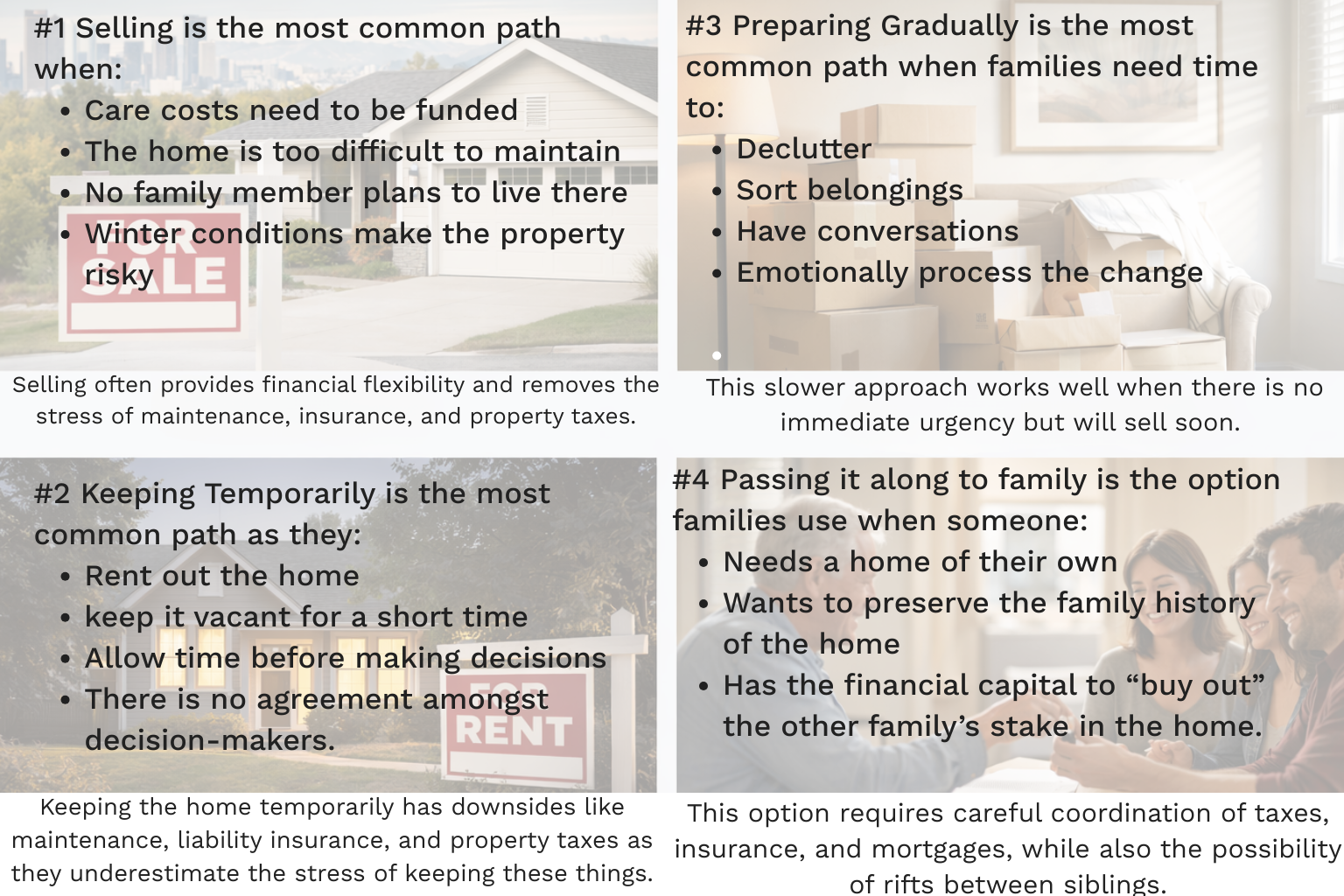
Many Families Decide It Is Best To Sell the Home
This decision is best made when emotions are taken out of the equation. Remembering that the best thing for your parent is for them to be in a home that is the right size for their lifestyle, health, and safety. The decision brings up a whole new set of questions for the family
Questions Families Often Ask When It’s Time to Sell The Home:
Q: Can selling a home help pay for care?
A: For many families, the value of the home becomes an important financial resource that helps support the next stage of life.
Q: How long does selling a parent’s home usually take?
A:The timeline varies depending on the condition of the home, the local housing market, and the preparation needed before listing.
Q: What if siblings disagree about what to do with the house?
A: It’s common for family members to have different perspectives. Understanding the available options and having open conversations often helps families move toward a decision together.
A Calm Path Forward (When Everything Feels Overwhelming)
RIGHTSIZING is a carefully thought-out process that has three separate steps :
Step 1 — Gain Clarity Understand where your family is in the transition process and what decisions need to be made now versus later.
Step 2 — Create a Plan Develop a realistic timeline for your parent's move and what needs to happen with the home. I help you see all options clearly.
Step 3 — Take Action Calmly With a clear plan and experienced support, families navigate the transition without crisis-mode stress.
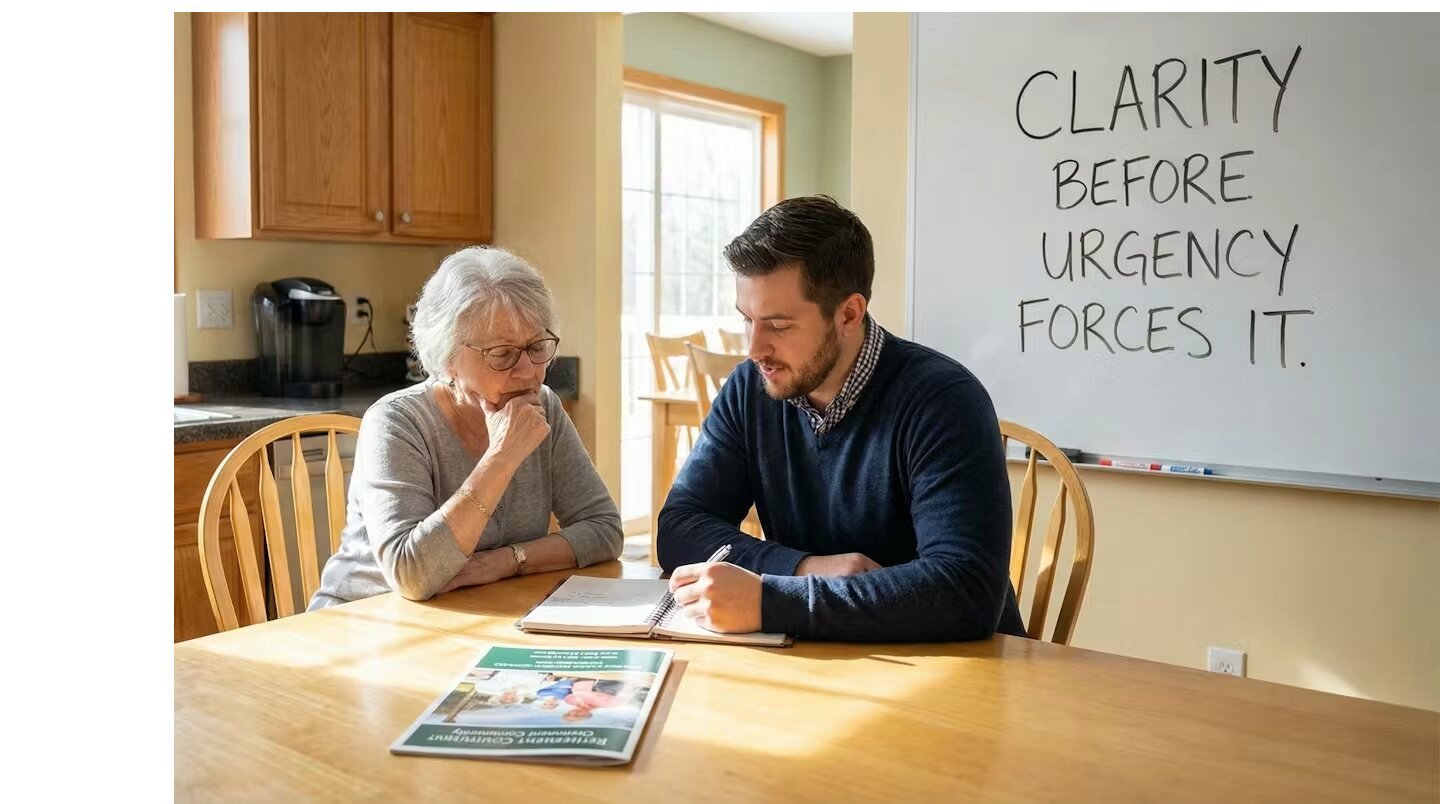
Not Sure What Step Your Family Is In?
The Right-Sizing Quiz helps families understand whether it may be time to start planning, preparing, or moving forward.
It takes about two minutes.
For more detailed guidance, check out our Family Resource Guide and Blog covering topics like:
• Signs aging parents need support
• How to talk to parents about moving
• What to do with a parent’s home
Each article answers real questions families are typing into search engines.