What Home Modifications Actually Are Right for Your Aging Parents House
Most families don’t plan this. They probably don’t even want this…
But it happens
Usually, they start with a moment.
A fall. A close call. A parent grabbing the wall instead of the railing. A conversation that quietly changes from “they’re doing great” to “maybe we should start thinking ahead.”
And then comes the question:
Should we modify the house?
The answer is sometimes yes.
But not every modification makes sense.
Some changes improve safety and quality of life. Some are expensive overreactions. Some hurt resale value. And some are made too late to actually solve the bigger issue. The biggest questions about modifications are…
Simple Answer
If the home is well maintained and modifications make it easier for your mom or dad to stay there, modifications may be right. If modifications do not enhance safety, care, and quality of life, consider other options.
Which aging-in-place modifications usually help
What they typically cost
Which upgrades improve or hurt resale value
What families often regret spending money on
When modifying the house makes sense… and when it may not
Confused about the process, Start Here
The Biggest Mistake Families Make
Most families assume there are only two options:
Usually, neither extreme is necessary.
Most homes only need targeted safety improvements.
The goal is not to turn the house into a hospital. The goal is to make daily life safer, easier, and more manageable.
Move immediately
Fully remodel the home
Learn more about how to talk to your mom or dad about this
What Home Modifications Usually Make the Most Sense
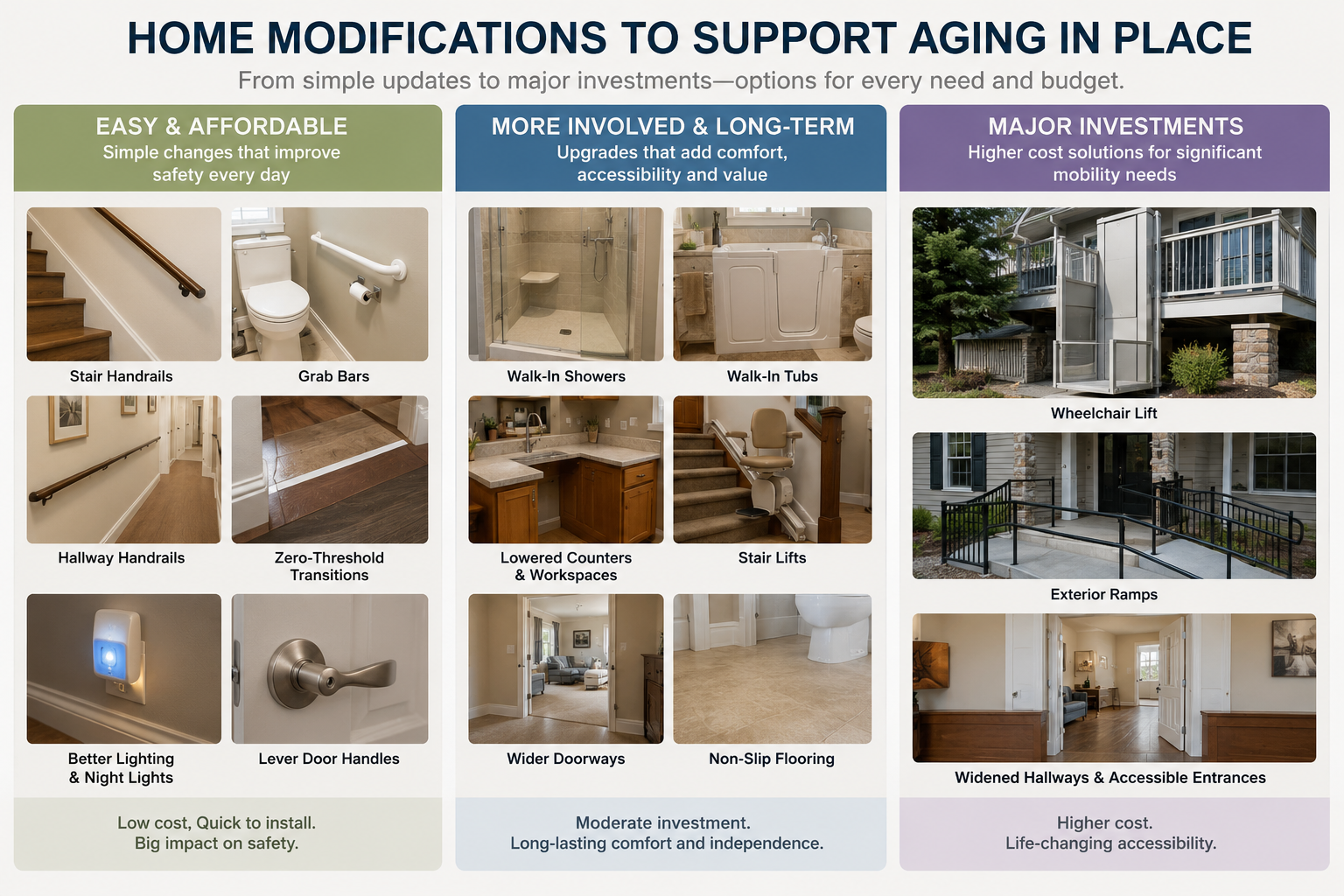
Walk-In Showers
Walk-in showers are one of the most common modifications families explore.
Typical Cost:
$6,000 to $20,000+
Why It Helps:
Reduces step-over fall risk
Easier for mobility limitations
Makes bathing less physically demanding
Potential Downsides:
Expensive
Some remodels remove bathtubs entirely, which can hurt resale value in certain homes
May not matter if the home will likely be sold in the near future
Improved Lighting
This is one of the most overlooked safety upgrades.
Typical Cost:
$100 to several thousand depending on scope
Helpful Improvements:
Motion sensor lighting
Brighter hallway lighting
Stair lighting
Exterior pathway lighting
Why It Matters: As vision changes, shadows and poor lighting become much more dangerous.
This is one of the few modifications that:
improves safety
improves appearance
usually helps resale value
Grab Bars in Bathrooms
This is one of the best safety upgrades per dollar.
Typical Cost:
$150 to $600 depending on placement and installation
Why It Helps:
Bathrooms are one of the most common places seniors fall
Helps with balance and confidence
Particularly important near toilets and showers
Resale Impact:
Usually neutral if installed cleanly and professionally
Modern grab bars now look far less “medical” than older versions
Ramps
Ramps can be incredibly useful in the right situation.
Typical Cost:
Portable ramps: a few hundred dollars
Permanent ramps: $2,000 to $10,000+
Important Considerations:
Exterior appearance
HOA restrictions
Snow and ice concerns in Denver
Whether mobility limitations are temporary or progressive
Stair Lifts
Few modifications create more debate.
Typical Cost:
$3,000 to $15,000+
When They Make Sense:
Multi-story homes
Strong desire to remain home
Cognitively intact parent
Good long-term support system
When They Usually Don’t:
Significant memory issues
Severe mobility decline
Homes already becoming difficult to manage overall
Resale Considerations:
Usually neutral because many are removable
Buyers may perceive them emotionally as signs of decline
My Opinion:
Is this solving the long-term issue… or delaying a larger decision? If the parent is likely staying in the home for several years, this can make sense. If the move may happen within 12-24 months, families often regret the cost.
Why it hurts value
Which Modifications Usually Hurt Resale Value
This depends heavily on the neighborhood, price point, and quality of work.
But generally speaking, these can make resale harder if done poorly:
Highly medical-looking remodels
Removing all bathtubs
Permanent institutional features
Over-customized accessibility layouts
DIY modifications
The biggest issue usually isn’t the modification itself - It’s when the house begins feeling “specialized” instead of livable.
What Modifications Usually Help Resale Value?
There are some things that you can do to their home that serves a dual purpose - both helps your mom or dad and helps the resale value. Some upgrades that improve both safety and marketability:
The Best Part Is…
Many of these upgrades are exactly what young buyers are looking for. Things like…
Convenience.
Accessibility.
Ease of living.
are timeless for all buyers
Main-floor living functionality
Modern bathrooms
Safer stair railings
Smart home features
Better lighting
Wider walkways
Updated flooring
If you’re looking for where to start, Start here…
How Families Usually Decide
The families I have worked with are sometimes at an impasse. They definitely want the home to continue to be right for their mom or dad, but they also are hesitant to take on expensive remodels and renovations.
The question isn’t…
Can the house be modified?
Hint: Every house can…
The better question should be…
Does modifying the home still make sense for your parent’s life?
Some of the key things to look at when deciding concerns…
Safety
Finances
Support systems
Future decline
Isolation
Maintenance burden
Cognitive changes
Care needs
Sometimes staying home is the right decision - but, sometimes it delays an inevitable crisis.
That’s why this decision is so hard and you may need help and learn how I help
Questions Families Should Ask Before Spending Any Money
These decisions are important for your mom or dad’s safety and comfort, but they are also potentially very expensive and stressful. I always advise to honestly answer these questions:
Is this likely temporary or long-term? The modifications may have to be modified again soon.
Is the parent open to change? Even in their home, life will be different
Are there memory concerns? Modifications can upset or worsen memory issues
Who will maintain the home? Your mom or dad likely will likely not be able to
Is the house itself becoming overwhelming? A already somewhat out of control will only get worse
Would support services cost less than renovations? Even with the modifications, the expenses don’t stop
Would moving improve quality of life? Sometimes staying in the home is what’s right for you…not them
If you’re not sure where to start, Start Here
What I Usually Tell Families
You do not need to solve everything at once.
You also do not need to spend $80,000 trying to preserve a version of life that may already be changing.
The goal is clarity.
Then the right next step.
Find out more about how I help